What Is AI Performance Marketing?
You're running campaigns across Google, Meta, LinkedIn, and TikTok. Data is coming in from five dashboards. Your team is making bid adjustments based on last week's numbers. And by the time those adjustments go live... the moment has already passed.
That's the reality of traditional performance marketing. It's reactive by design. Campaigns launch, data trickles in over days or weeks, someone pulls a report, and then changes happen. Budget burns while you wait.
AI performance marketing flips that model. It uses machine learning, predictive analytics, and automation to manage digital ad campaigns in real time. Instead of waiting for reports and making manual tweaks, AI tools analyze live data, spot patterns, and act on insights automatically.
It's proactive. It predicts what's likely to work based on current behavior and adapts the moment conditions change. For B2B SaaS teams juggling multiple platforms simultaneously, this speed gap is the difference between wasted spend and compounding returns.
How Does AI Performance Marketing Compare to Traditional Methods?
What Are the Core Benefits of AI in Performance Marketing?
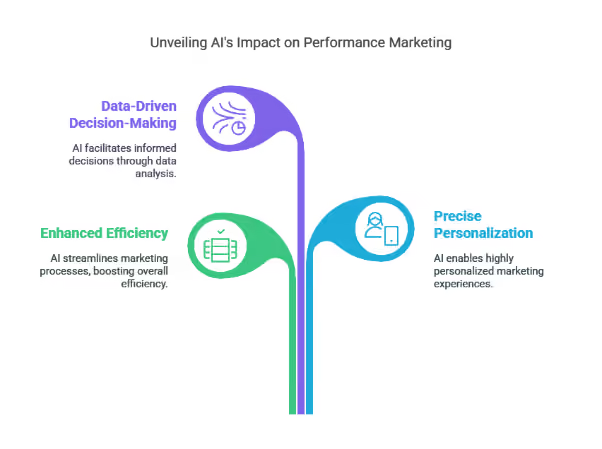
AI changes how marketing teams make decisions and how fast campaigns evolve. But the benefits aren't abstract. They show up in three specific areas.
Operational Efficiency at Scale
- Automated bid and budget management: AI tools dynamically adjust bids and budgets, reducing wasted ad spend and improving ROI by 50% according to Zebracat's analysis of AI marketing benchmarks.
- Rapid creative testing: Machine learning algorithms test multiple ad variations simultaneously, boosting lead-to-customer conversions by up to 20%.
- Real-time strategy pivots: If mobile users are more engaged than desktop users, AI reallocates spending to mobile and suggests new creatives for desktop. No delay. No human pulling levers.
Precise Personalization Across Channels
- Behavioral audience targeting: AI analyzes behavior across platforms to identify what users want, so brands deliver tailored messages that convert.
- Contextual engagement: AI triggers perfectly timed actions. Think: reminding someone about their abandoned cart with a personalized product recommendation exactly when they're most likely to buy.
- Connected journey orchestration: It links touchpoints across ads, search, video, and email. A prospect sees an Instagram post today, a Google ad tomorrow, and a personalized email the next morning. That's AI coordinating the full journey.
Personalized AI-driven campaigns have boosted ad recall and click-through rates by 270% and 20% respectively, compared to non-personalized campaigns.
Data-Driven Campaign Intelligence
- Predictive performance modeling: AI forecasts campaign outcomes with higher accuracy, giving you time to pivot, fix, or double down before results roll in.
- Multi-touch attribution: Performance marketing AI breaks down every customer interaction, showing exactly which channels and actions drive real conversions. Not just last-click guesses.
- Creative intelligence: AI goes beyond basic A/B testing. It tests multiple versions of ads, headlines, visuals, and CTAs simultaneously. Gen Z may respond to bold designs and casual language, while enterprise buyers prefer cleaner layouts with clear value propositions.
How Can You Implement AI in Your Performance Marketing Strategy?
Jumping in without a plan is just as risky as doing nothing. Here's how to approach it step by step.
1. Invest in AI-Powered Marketing Platforms
Choose tools designed for intelligent, scalable marketing. Look for platforms that:
- Integrate with your stack: Compatibility with your CRM (e.g., HubSpot), ad platforms (e.g., Google Ads, LinkedIn), and analytics tools (e.g., GA4) is non-negotiable.
- Provide real-time insights: Platforms like Adverity surface current performance trends without manual data pulls.
- Manage multi-channel campaigns: Oversee ads across Google, Meta, TikTok, and LinkedIn from a single dashboard, such as Smartly.io.
- Adapt autonomously: Predictive analytics (Salesforce Einstein) and dynamic creative testing (Meta Advantage+) that adjust in real time.
The best AI tools for performance marketing ROI improvement aren't always the most expensive. They're the ones that integrate tightly with your existing workflow.
2. Focus on Data Quality and Team Upskilling
AI needs clean data and capable hands to deliver results.
- Clean up your data: Ensure accurate tracking, reliable customer information, and properly configured analytics. Garbage in, garbage out applies doubly to AI.
- Train your team: Help marketers understand what the AI tool is doing and when human judgment is still needed. In 2024, 78% of organizations reported using AI in at least one function, up from 55% the year before.
- Build AI confidence: Teams that understand the "why" behind AI recommendations make better override decisions. Upskilling drives adoption and impact.
3. Start Small With Pilot Projects and Cross-Team Collaboration
No need to overhaul everything overnight.
- Run a pilot: Test AI on a single campaign (search bidding or social creatives, for example) and track what improves.
- Share the wins: Once you see results, expand the use case and get internal buy-in.
- Loop in other teams: Bring sales, product, and customer success into the conversation. Their input creates a full-picture view that makes AI smarter.
This is a practical AI performance marketing framework that works whether you're spending $5K or $500K per month.
Reddit marketers are actively discussing what works in practice:
how are you using AI in performance marketing workflows?
What Should You Consider Before Implementing AI?
AI is powerful but not infallible. Before diving in, address these three areas.
Data Privacy and Compliance
AI relies on data to deliver smarter marketing. And handling customer data comes with serious responsibilities.
- Protect user data: Follow data protection laws like GDPR and CCPA. Non-compliance isn't just a legal risk; it's a brand risk.
- Get clear consent: Be transparent about what data you collect and how you use it.
- Build trust: Show customers you value privacy. It boosts credibility and long-term loyalty.
Resource Allocation and Integration Planning
AI tools require budgets, infrastructure, and proper setup.
- Plan your investment: Set a realistic budget for software, implementation, and ongoing management.
- Check your stack: Choose platforms that integrate well with your CRM, CMS, and ad systems. Fragmented tools create more problems than they solve.
- Avoid tool overload: Using too many separate tools makes work harder instead of easier. Consolidation beats accumulation.
Expectation Management and Ethical Guardrails
- Set realistic goals: AI helps you scale and optimize, but it won't fix a broken strategy or a weak value proposition.
- Avoid bias: Ensure your data sources are diverse and balanced to prevent skewed outputs.
- Keep a human in the loop: AI supports decisions. It doesn't replace the judgment of experienced marketers.
What Are the Future Trends Shaping AI Performance Marketing?
AI in performance marketing is becoming the brain behind every click, bid, and conversion. Here are five trends B2B SaaS marketers need to watch.
1. How Is AI Changing Media Buying and Budget Optimization?
Platforms like Google Performance Max and Meta Advantage+ use AI to automate bid strategies, budget allocations, and audience targeting. AI optimizes campaigns based on return on ad spend (ROAS), not just impressions or clicks.
Predictive bidding adjusts spend dynamically across channels, automatically pushing dollars toward the highest-converting audiences.
84% of companies investing in AI are now seeing positive ROI. That's a signal that AI-driven media buying has moved from experimental to essential.
2. How Does Dynamic AI Create Hyper-Personalized Ad Creatives?
Personalization goes far beyond "insert first name here."
AI tools generate thousands of ad variations based on user behavior, demographics, and past purchase signals. Dynamic Creative Optimization (DCO) platforms like Ad-Lib.io and Jivox build ads that rewrite themselves in real time based on who's watching. Generative AI fine-tunes copy, images, offers, and CTAs to match micro-segments of audiences.
This is where AI performance marketing strategies for e-commerce brands and B2B SaaS companies diverge. SaaS campaigns need to account for longer sales cycles and multi-stakeholder buying committees.
3. What Is Predictive Lifetime Value (pLTV) Modeling?
Forget just targeting buyers. Start targeting your best buyers before they even convert.
AI models predict a user's future lifetime value within their first few clicks or interactions. Marketers can segment audiences by their pLTV instead of basic demographics.
High-potential users get personalized nurture streams and higher ad bids, while low-value users get deprioritized. No human guesswork involved.
4. How Are AI Tools Enabling Creative Testing at Scale?
A/B testing feels outdated compared to what's available now.
AI tools like Marpipe and Pencil run thousands of multivariate creative tests in parallel, finding top-performing combinations before campaigns even launch. Instead of picking winners after the fact, AI tests every element in real time: headline, image, CTA, color palette.
Winning creatives constantly evolve based on audience behavior and external factors like seasonality, pricing trends, and social buzz.
5. How Is AI Making Attribution Modeling Less Complex?
The deprecation of third-party cookies has made attribution a persistent headache. AI is building a new roadmap.
Machine learning models now stitch together fragmented user journeys across devices and platforms. Tools like Triple Whale and Rockerbox use AI to fill gaps left by iOS privacy updates and cookie deprecation.
Marketers get clearer, faster answers about what's driving conversions. We're moving well beyond last-click attribution.
This is one of the most discussed topics in the performance marketing community right now:
Connection between AI & Performance Marketing
What Do Real-World AI Performance Marketing Wins Look Like?
Theory is useful. Results are better. Here are documented cases of AI performance marketing delivering measurable impact, plus how we've seen similar patterns play out with our own clients.
KEH Camera: 76.3% Revenue Increase With Performance Max
KEH Camera, a reseller of photography gear, transitioned from manual Google Shopping ads to Google's AI-driven Performance Max campaigns. Within one quarter, they saw a 76.3% rise in revenue and a 44.1% jump in transactions by letting AI optimize their campaigns gradually and strategically.
Studio Cappello: 80% Revenue Growth on 7% More Spend
Digital agency Studio Cappello used AI features in Performance Max to increase revenue by 80%, with just a 7% increase in ad spend. Smarter product feeds and better use of business data made all the difference.
Joybird: 95% Revenue Scale With 40% ROAS Improvement
Furniture retailer Joybird scaled revenue by 95% and boosted ROAS by 40% after moving to AI-driven Performance Max campaigns.
Which AI Tools Should B2B SaaS Teams Evaluate First?
Choosing the right AI performance marketing tools depends on your campaign goals, budget, and existing tech stack. Here's a categorized breakdown of what top AI platforms in performance marketing offer in 2026:
Bid & Budget Management:
- Google Performance Max — Automated cross-channel bidding and audience targeting within Google's network.
- Meta Advantage+ — AI-driven campaign automation for Meta's ad platforms.
Creative Testing & Generation:
- Marpipe — Multivariate creative testing at scale.
- Pencil — Generative AI for ad creative production and performance prediction.
Analytics & Attribution:
- Triple Whale — AI-powered attribution and analytics for DTC and SaaS brands.
- Rockerbox — Multi-touch attribution across digital and offline channels.
- Adverity — Cross-channel performance data integration and visualization.
Predictive Intelligence:
- Salesforce Einstein — Predictive analytics embedded within CRM workflows.
When evaluating tools, prioritize integration depth over feature count. A tool that connects natively to your CRM, ad platforms, and analytics stack will deliver more value than a standalone product with impressive demos but poor interoperability.
The Reddit community has strong opinions on which tools deliver:
What AI tools are you using to help with performance marketing?
How Do You Measure AI Performance Marketing Campaign Success?
Measuring AI campaign success requires looking beyond surface-level metrics. Here's a framework for B2B SaaS teams:
Leading Indicators:
- Cost per qualified lead (not just cost per lead)
- MQL-to-SQL conversion rate improvements
- Creative fatigue detection speed
- Budget pacing accuracy
Lagging Indicators:
- Pipeline contribution from paid channels
- Customer acquisition cost (CAC) trends
- Return on ad spend (ROAS) by channel
- Revenue attributed to AI-optimized campaigns
AI-Specific Metrics:
- Time saved on manual optimization tasks
- Number of creative variants tested per campaign cycle
- Prediction accuracy of AI bidding models
- Cross-channel attribution confidence scores
The step-by-step guide to implementing AI performance marketing measurement starts with defining what "success" means for your specific funnel stage. Awareness campaigns need different KPIs than bottom-of-funnel conversion campaigns.
For deeper guidance on tracking and analytics setup, see our guide on marketing analytics.
How Can TripleDart Help You Put AI to Work?
AI is reshaping how marketers plan, execute, and optimize campaigns. Every move gets faster, every target gets smarter, every result gets more measurable.
But tools alone don't produce results. You need the strategic layer on top.
TripleDart is an AI-native PPC agency and performance marketing agency built for B2B SaaS brands that want to scale with precision. Our AI PPC capabilities and AI marketing agent help you automate bid management, optimize creative testing, and personalize campaigns, all backed by real-time data and intelligent insights.
We've managed campaigns across Google Ads, Meta Ads, and LinkedIn Ads for over 100 B2B SaaS accounts. Whether you need a full AI PPC audit or a complete campaign overhaul, we bring the AI infrastructure and the human expertise to make it work.
Book an intro call with our team today.
FAQs
How can I start using AI in my current marketing strategy without a huge budget?
Start small with free or low-cost AI tools built into platforms you already use: Google's automated bidding, Meta's Advantage+ campaigns, or HubSpot's AI features. Focus on one area, like bid automation or creative testing, and scale as you see results.
Do I need a technical background to use AI marketing tools?
No. Most AI marketing tools are designed for marketers, not engineers. They come with built-in automation and dashboards. Basic marketing knowledge is enough to get started and drive value. The key is understanding your campaign goals clearly so you can evaluate AI recommendations with confidence.
What are the best AI tools for performance marketing in 2026?
Top AI tools include Google Performance Max for cross-channel bidding, Smartly.io for paid media management, Salesforce Einstein for predictive analytics, Adverity for cross-channel tracking, and Marpipe for multivariate creative testing. The best choice depends on your specific stack and campaign objectives.
Can AI personalize content for different audience segments at scale?
Yes. AI analyzes behavior and preferences to deliver personalized messages automatically across email, ads, and web, without manual setup for each segment. For B2B SaaS, this means tailoring messaging by industry vertical, company size, or buying stage without creating hundreds of manual variations.
How does TripleDart help with AI performance marketing?
TripleDart is an AI-native PPC agency that combines AI-powered tools with experienced B2B PPC strategists to manage campaigns across Google, Meta, and LinkedIn. Our AI marketing agent automates bid management, creative testing, and reporting, while our team provides the strategic oversight that AI alone can't deliver. We've helped clients like CleverTap exceed their FY24 pipeline quota by 113% and JoinBrands achieve 6x revenue growth on the same ad spend. Book a call to see how we can help your SaaS brand scale paid campaigns with AI.