How AI in PPC is Revolutionizing Digital Ads
.avif)
Key Takeaways
- AI handles the grunt work of SaaS PPC so you can focus on strategy. Automated bidding, audience segmentation, and creative optimization all run faster and more accurately than manual management.
- Over 80% of Google advertisers already use automated bidding. If you're still adjusting bids by hand, you're spending hours on work the algorithm does in milliseconds.
- The real shift in 2026: PPC success depends less on controlling every lever and more on feeding AI the right signals. Clean conversion data, strong first-party audiences, and high-variance creative are your new competitive advantages.
- AI-powered workflows at TripleDart deliver a 22% ROAS improvement and 18% CPL reduction across 84 managed B2B SaaS accounts, proving that AI enhances expert execution rather than replacing it.
- Start with one AI application (Smart Bidding, RSAs, or a tool like Optmyzr), measure the impact, and expand from there. Going all-in without proper conversion tracking leads the algorithm toward the wrong goals.
Google is tweaking algorithms every other week, costs-per-click (CPCs) are shooting up, and manual campaign management is becoming nearly impossible to keep up with. You're tired of testing a hundred versions of the same ad just to maybe get a slightly better click-through rate.
The problem? Traditional pay-per-click (PPC) tactics can't keep up with how fast things move now. Audience behavior shifts overnight. Platforms auto-apply changes you didn't ask for. And campaign data? There's too much of it to process manually.
That's where artificial intelligence (AI) actually helps with real results. We're talking smarter targeting, automated bid strategies that adjust by the minute, and ad creatives that update based on what's actually working.
That’s where artificial intelligence (AI) actually helps with real results. We’re talking smarter targeting, automated bid strategies that adjust by the minute, and ad creatives that update based on what’s actually working.
In this blog post, we’ll break down how AI is transforming PPC management and how we at TripleDart put AI to work in your PPC campaigns.
How Does AI Work in PPC?
AI is at work throughout the PPC cycle: planning (research and audience discovery), execution (bidding and creative), and optimization (analysis and fraud prevention).
The mindset shift matters here. In 2026, PPC management has moved from "campaign management" to "system management." You're no longer tweaking individual bids and keywords. You're teaching the AI who your ideal customer is, what a valuable conversion looks like, and what creative resonates. The machine handles the rest.
1. Automated Bidding
Manual SaaS PPC bidding can't keep up with changing factors like user intent, device, time, location, and competition.
Platforms like Google Ads take over that complexity. It uses AI to analyze real-time data, predict conversion likelihood, and adjust bids dynamically, helping you reach the right audience at the right time without wasting your budget. In fact, over 80% of Google advertisers are using automated bidding.
The benefit is twofold:
- Improved performance (more conversions or higher value)
- Saved time for marketers, who no longer need to constantly tweak bids manually
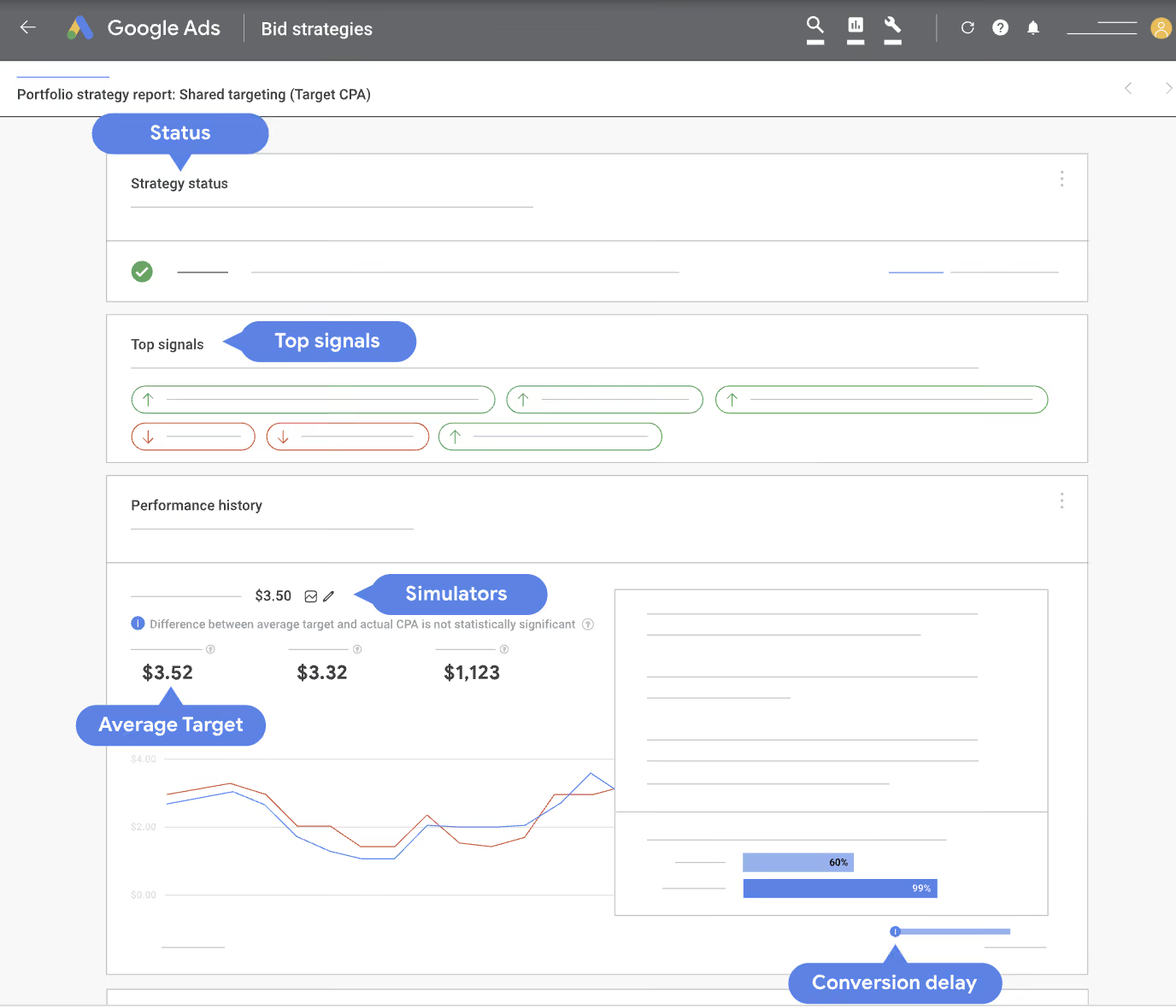
Here's how it works:
- Data collection and analysis: AI tools extract data from various sources, like past campaign performance, audience behavior, keyword trends, and even competitor activity. Then, they continuously analyze this data to identify patterns, gaps, and new opportunities.
- Real-time bid adjustments: Instead of setting static bids, AI adjusts them in real time based on key signals like time of day, device, location, and keyword competitiveness. This means your bids are always aligned with the highest potential for return.
- Goal-oriented optimization: Whether your objective is more conversions, a lower cost per acquisition (CPA), or a higher click-through rate (CTR), AI aligns bidding strategies with your goals and fine-tunes them automatically as conditions change.
- Predictive modeling: Using historical and real-time data, AI forecasts which clicks are most likely to convert and adjusts bids accordingly. You spend more where it matters, and less where it doesn't.
- Competitor insights: AI tracks competitor bids and adjusts yours to stay competitive without overspending.
🚨 Remember: Advertisers need to set the right targets, like a target CPA or return on ad spend (ROAS), and let the algorithm do the heavy lifting. Plus, you still need to monitor and guide performance, but you're no longer stuck micromanaging every bid.
Value-Based Bidding for SaaS
The frontier for SaaS in 2026 is value-based bidding with offline conversions. You’re teaching Google’s AI that an SQL is worth more than an MQL, and a closed-won deal is worth the actual contract value.
Companies using value-based bidding report 30–50% lower cost per SQL compared to standard target CPA bidding. The AI learns which click patterns produce revenue, not just form fills.
Google’s AI now incorporates seasonality signals automatically. But you can stack manual seasonality adjustments on top for known events — product launches, annual conferences, and budget cycles.
2. Audience Targeting And Segmentation
When launching a new PPC campaign, most marketers rely heavily on past campaign data. While that's helpful, it can also be limiting and time-consuming.
You have to dig through old reports, analyze what worked, and try to figure out which audience segments to target again. Even then, you might miss out on new trends or untapped audience groups.
This is where AI shines by helping you find the right people to show ads to. AI tools:
- Combine historical and real-time data: Uses past campaign data along with current trends and seasonality to suggest relevant audiences based on what's working now.
- Identify new segments: Analyzes large-scale data like user behavior, interests, and purchase intent to uncover audience groups you might not find manually.
Most major ad platforms already use AI to help with this. For example, Meta Ads offers Lookalike Audiences which use data from your best-performing customers to find people with similar traits.
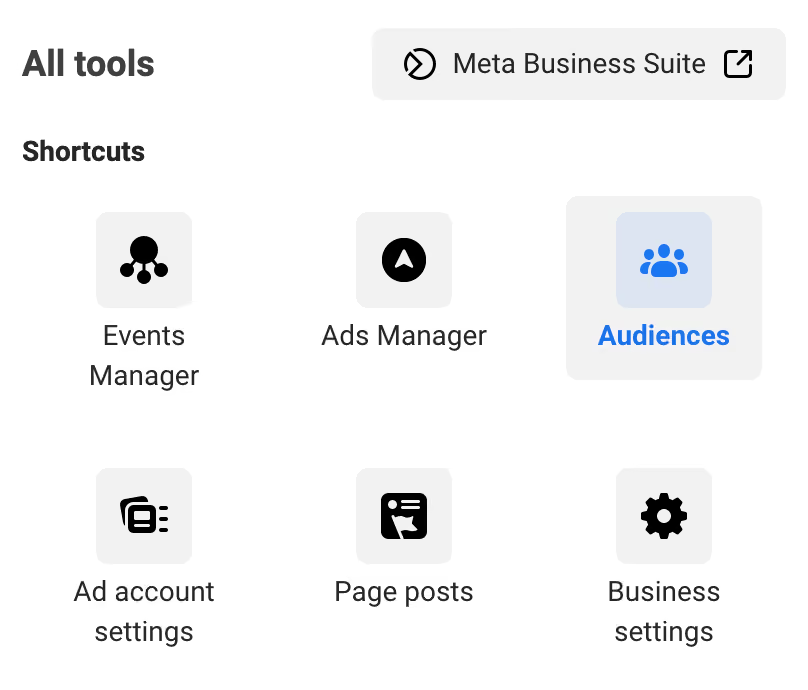
It also offers micro-segmentation, clustering your audience into niche groups that might be hard to identify manually. Let's say you're running ads for a project management SaaS. AI might segment your audience into:
- Freelancers who clicked on "free task tools"
- Small agencies comparing pricing pages
- Enterprise users reading integration docs
This allows your PPC campaigns to target more precisely and deliver personalized ads at scale.
3. Ad Copy And Creative Optimization
Ad copy is make-or-break in PPC. It's what gets your audience to stop scrolling, click, and convert. But writing high-performing copy, especially at scale and for multiple audience segments, is exhausting.
With AI, you can:
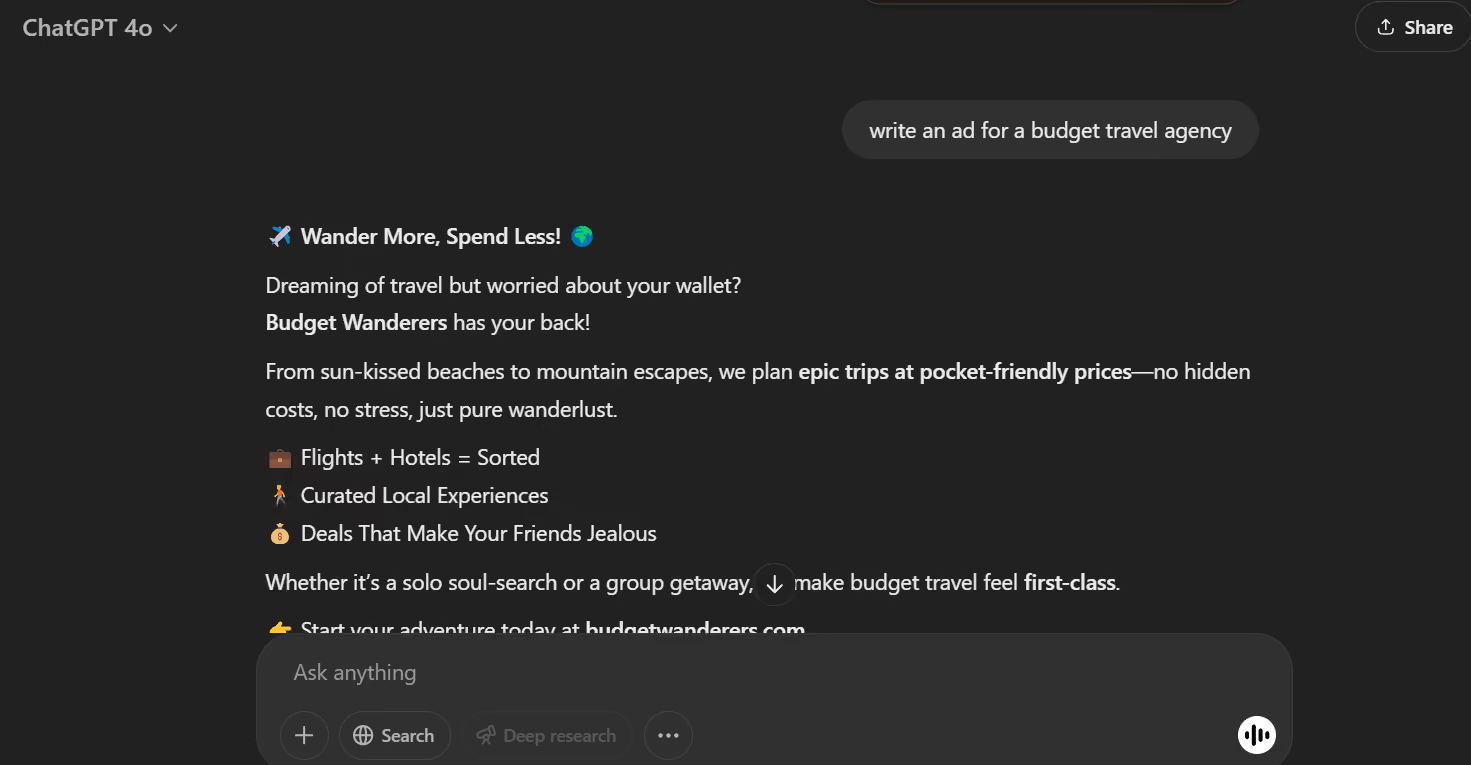
- Generate copy when you're stuck: AI tools like ChatGPT, Jasper, or Copy.ai can help you brainstorm instantly. Simply give a prompt like "write an ad for a budget travel agency" or "make this copy more persuasive," and it gives you multiple options in seconds.
These AI tools also group keywords by intent (informational, commercial, transactional) so you can structure your campaigns and ad groups more logically.
- Create multiple variations for testing: AI can instantly generate multiple headlines, descriptions, and CTAs for the same ad. This allows you to A/B test different tones, formats, and messaging angles without spending hours rewriting.
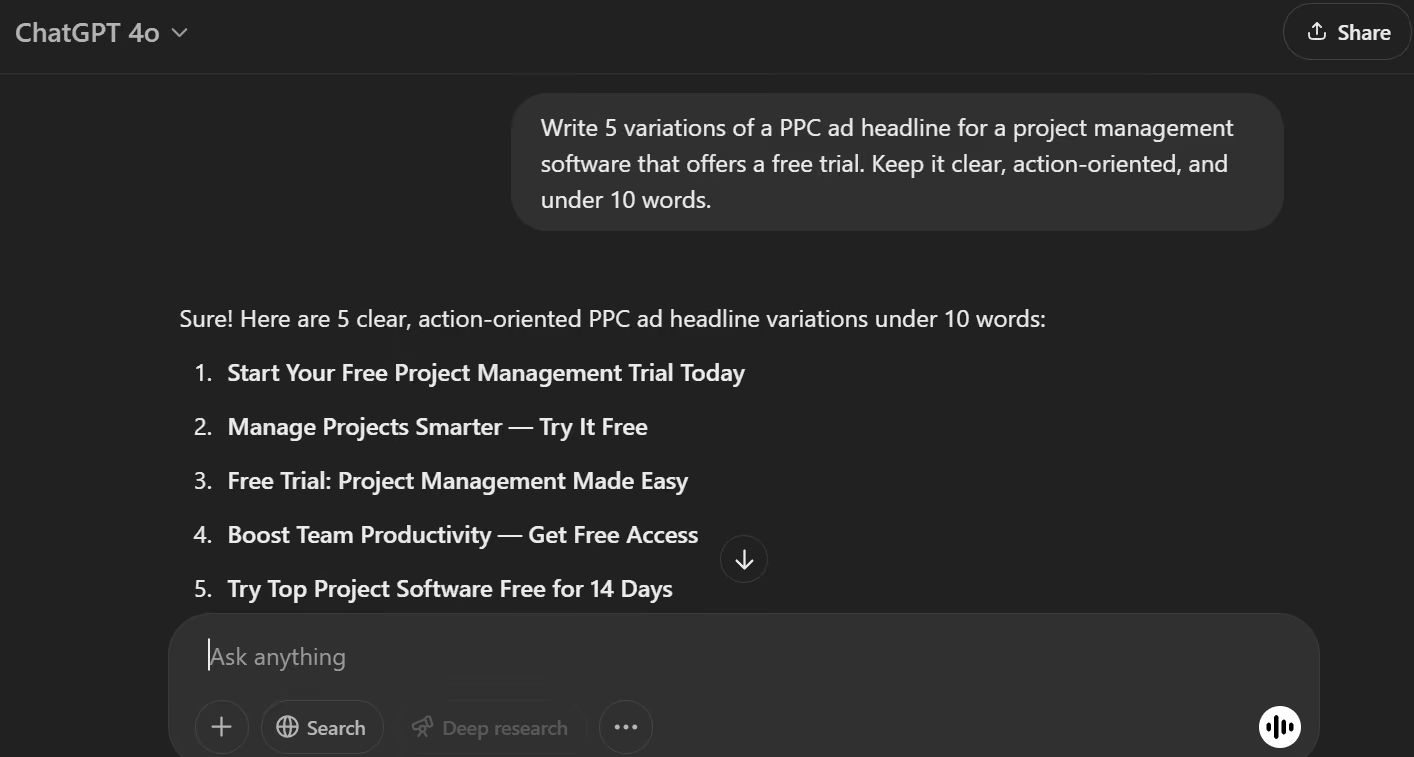
- Power RSAs: In Google Ads, Responsive Search Ads (RSAs) use AI to mix and match your headlines and descriptions based on the search query, device, and user behavior. Over time, Google's AI learns which combinations perform best for which users.
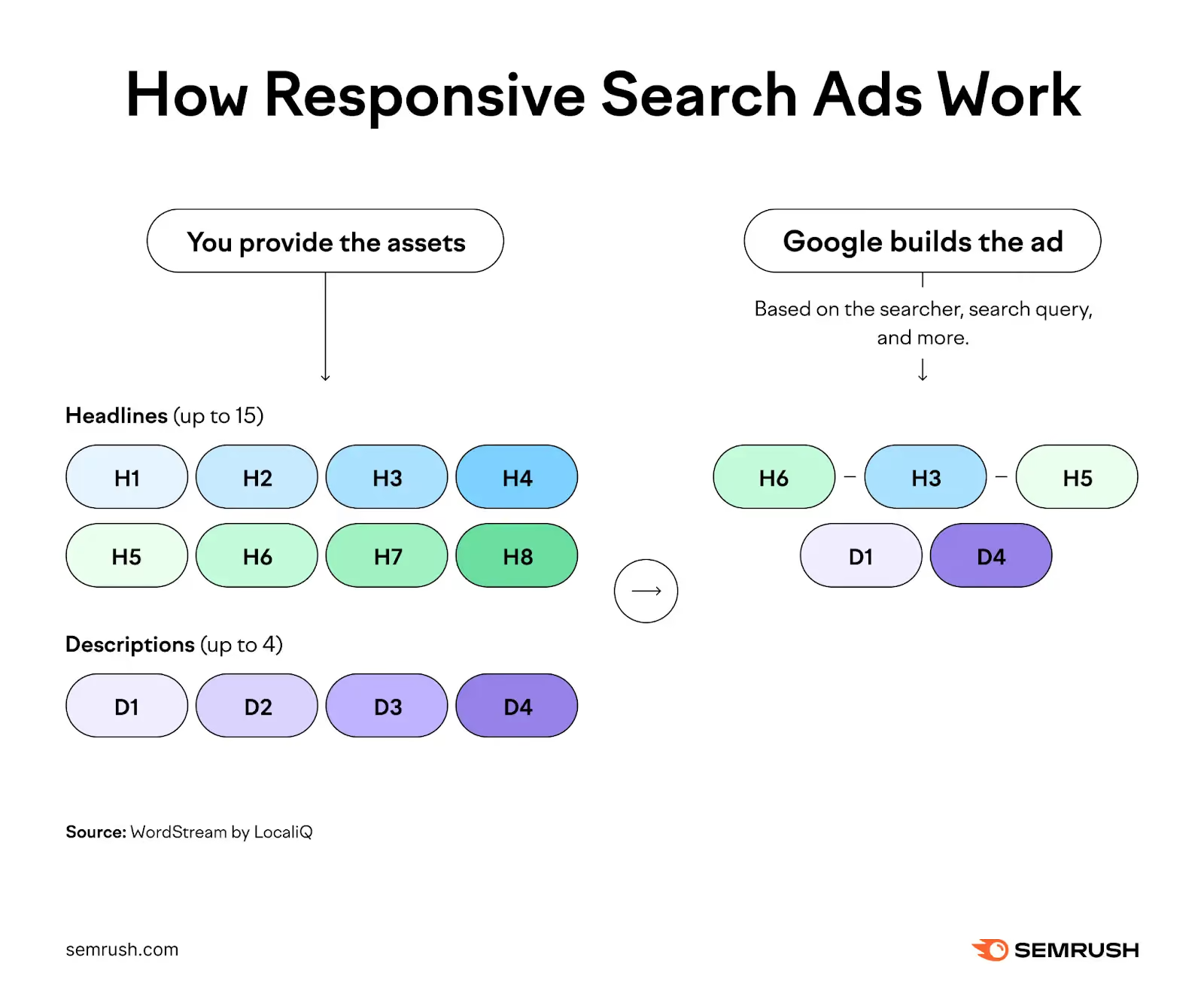
The payoff can be huge: advertisers have seen 61% more conversions after switching to responsive search ads, with CTRs up by 5-15% compared to old static ads.
- Adapt copy to the audience automatically: You can use AI to personalize creative elements like text, image, and CTA based on user actions like recently viewed products or cart behavior. For example, new visitors might see a softer CTA like "Explore Features," while returning users see "Upgrade Now." AI can also insert dynamic details like location or recently viewed products directly into the ad.
- Constantly optimize based on performance: As your campaign runs, AI tracks which messages drive the most engagement and conversions, then adjusts delivery to prioritize top-performing versions. You don't need to manually pause underperformers or guess what's working as it's handled in real time.
One thing we've seen across our managed accounts: creative velocity is now a competitive advantage.
Teams that refresh ad variations every two to three weeks and maintain at least 8-10 active headline/description combinations per ad group consistently outperform those running the same creative for months. Video ads in particular show 34% higher CTR and 28% lower CPL compared to static images across our portfolio.
AI image generation tools like Midjourney, DALL-E, and Canva’s AI features are changing how teams create ad visuals. They’re particularly useful for testing creative concepts before investing in professional design.
On the video side, tools like Synthesia and HeyGen create spokesperson-style videos without filming. Early results show AI-generated video ads performing within 10–20% of human-produced video for SaaS awareness campaigns.
4. Predictive Analytics For Better Decision-Making
AI in PPC helps you anticipate what's likely to happen so you can act before it does using predictive analytics. It looks at massive amounts of campaign data, detects patterns humans might miss, and uses those patterns to forecast outcomes with a high degree of accuracy.
Here's how it drives real decisions:
- Forecasts conversions based on behavior patterns: Say your campaign gets conversions mostly from mobile users who click between 7 to 9 p.m. and land directly on your pricing page. AI picks up on this pattern and begins to prioritize bids for users who match this behavior, even if the volume is low because it's high-intent.
- Identifies high-value leads before they convert: A lead from LinkedIn who downloads your B2B SaaS whitepaper might look just like 100 others. But AI sees their behavior match that of users who converted to annual plans in the past. Then, it increases bids for similar users and signals you to prioritize them.
- Predicts drop-offs and performance dips in advance: Google Ads might predict a 15% drop in conversions for next week based on historical seasonal trends. Instead of reacting late, you can shift budgets now, update creative, or push new offers before the dip hits.
- Runs "what-if" simulations: You want to know what happens if you increase your daily budget by 20%. AI shows you a forecasted increase in conversions based on similar historical campaigns, helping you make the call with confidence.
5. Keyword Research and Optimization
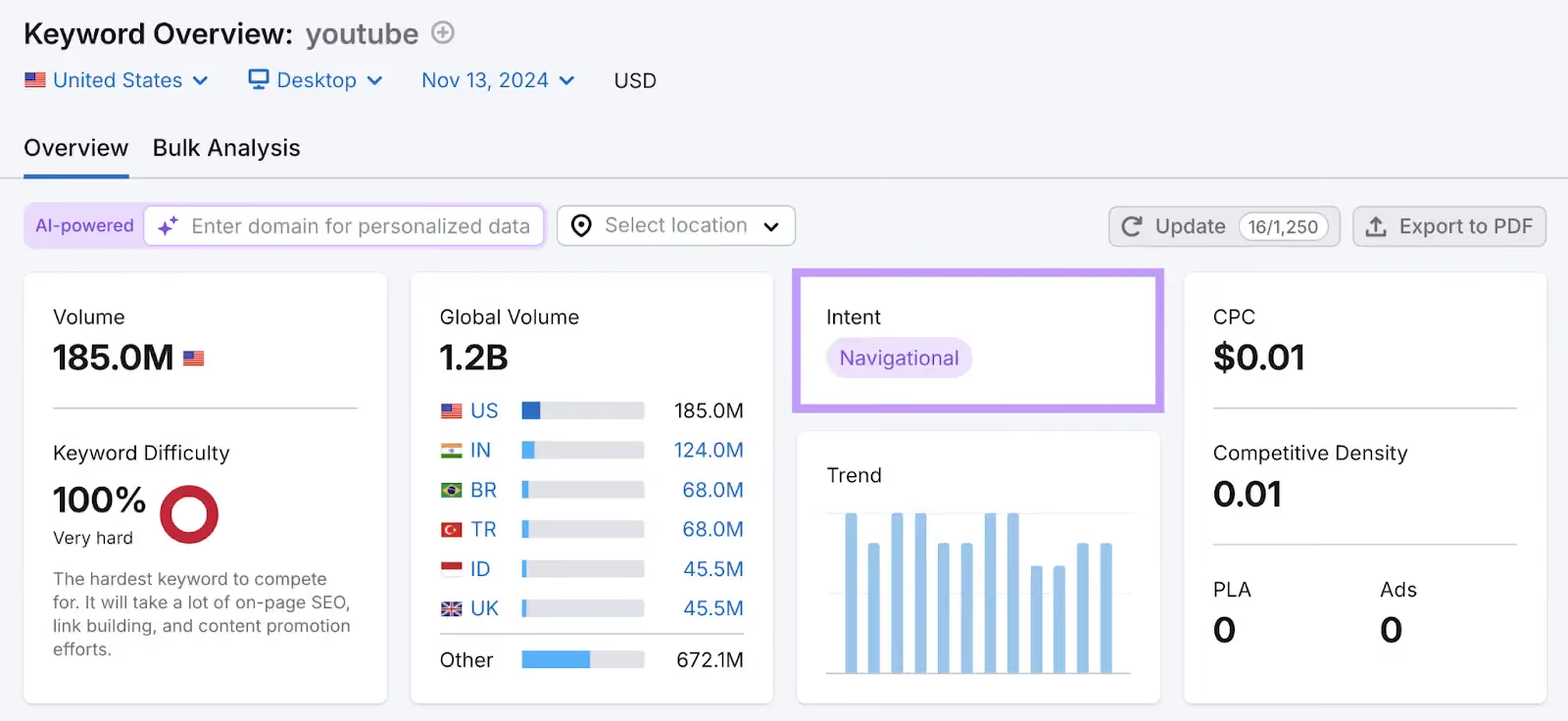
Keyword research can be a time sink. First, you dig through the Google Keyword Planner, then check volumes, competition, intent, and manually build lists. And that's before you even launch the campaign.
AI makes this whole process faster and smarter. This is how:
- Speeds up keyword discovery: AI assistants like ChatGPT or Gemini can generate long-tail and high-intent keyword ideas in seconds without manual brainstorming.
These AI tools also group keywords by intent (informational, commercial, transactional) so you can structure your campaigns and ad groups more logically.
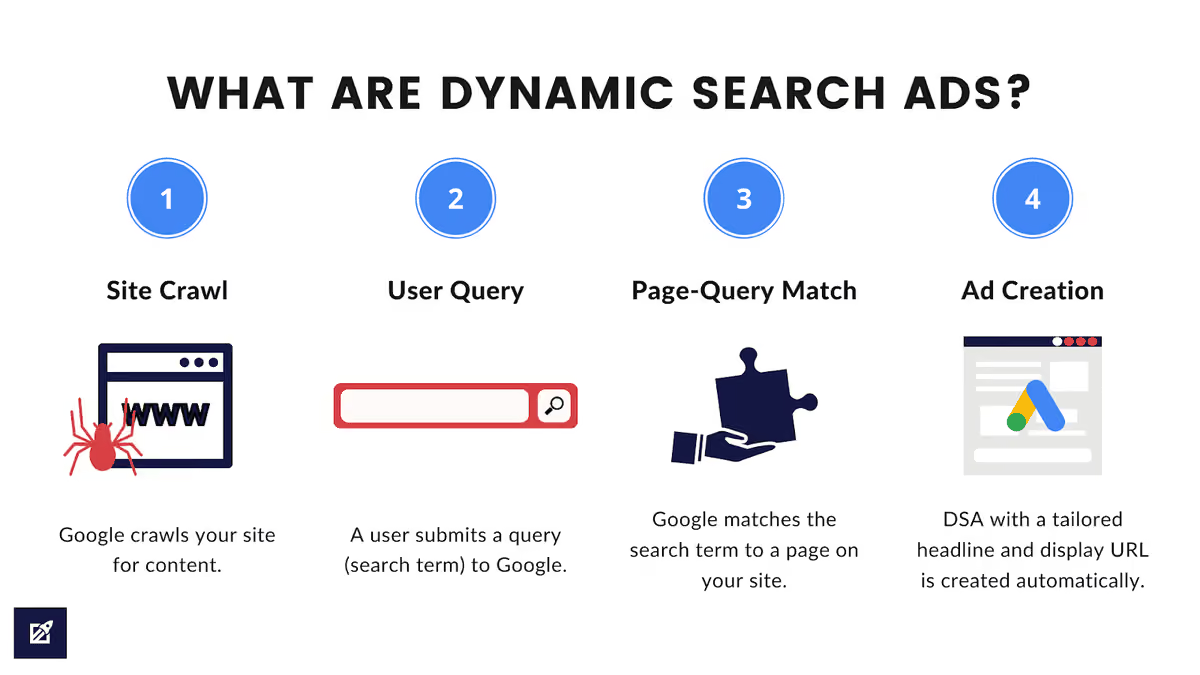
- Expands reach with DSAs: Google Ads uses AI in Dynamic Search Ads (DSAs) to automatically find relevant queries based on your website content, even ones you didn't target manually. It then generates an appropriate headline for the ad.
- Helps with negative keyword discovery: AI tools like Semrush scan your search terms reports and flag irrelevant or low-intent terms that are wasting your budget. For example, if your PPC campaign is for a premium fitness coaching service, and you're getting clicks on "free workout tips," AI can flag "free" as a negative keyword, saving you money.
6. Ad Performance Analysis and Recommendations
Running PPC ads isn't a set-and-forget job. Performance can shift overnight and if you're not watching closely, you could end up wasting budget or missing growth opportunities. AI-driven tools not only track data but also understand it and tell you exactly what to do next.
Here's how they help:
- Monitors performance in real time, 24/7: AI acts like a round-the-clock analyst. It watches your CTR, conversion rates, CPA, Return on Ad Spend (ROAS), and more, and immediately flags unusual changes that might take a human days to spot.
- Automatically spots outliers using baseline models: AI tools establish a "normal" range for your performance metrics using historical data. Then they flag statistically significant outliers. For example, if your average CPA is $50 and suddenly jumps to $150 on one campaign, AI won't wait for weekly reporting. It flags this instantly, recognizing the spike as unusual.
- Explains why performance changed: Conversions dropped by 20%, and AI also noticed a 20% decline in traffic from your top-performing source. It correlates the two, helping you understand that the issue isn't your ads or landing page but a drop in referral traffic.
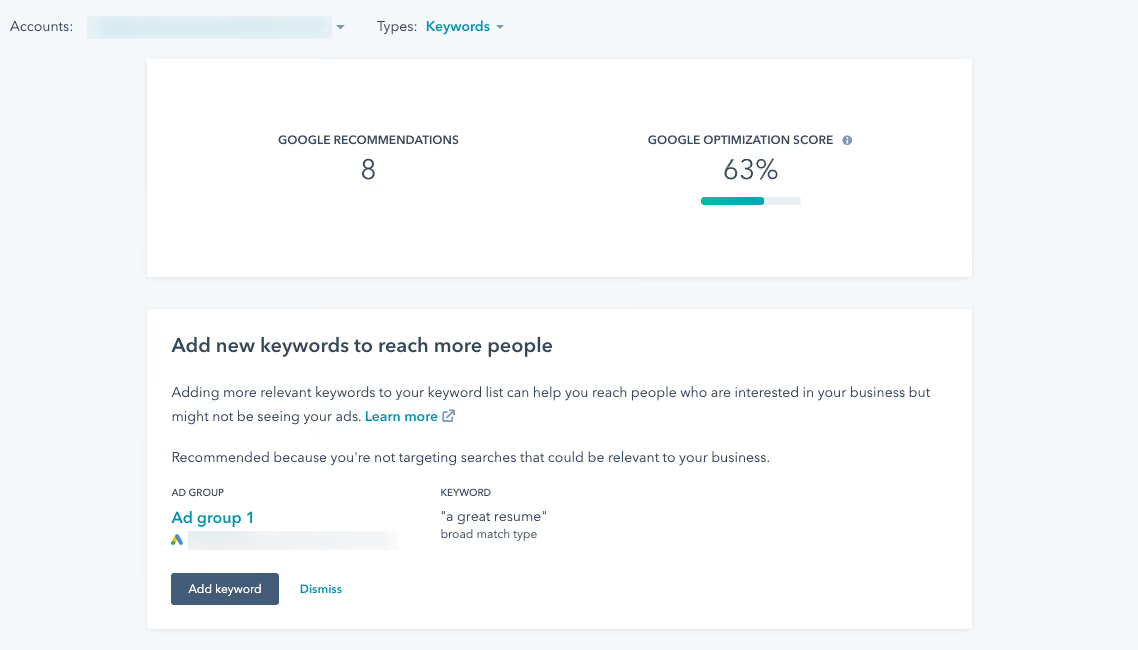
- Offers actionable, data-backed suggestions: Tools like Google Ads Recommendations, Meta Ads Manager, and even AI chatbots (like ChatGPT trained on your campaign data) can suggest very specific actions. For example: Your best-performing keyword is losing impression share due to low budget. Consider raising your bid cap by 15%.
7. Fraud Detection and Budget Protection
Click fraud may not be the flashiest topic in PPC. But if you're running ads in a competitive niche, it's one of the most important. Fake clicks from bots, competitors, or shady ad networks can quietly drain your budget without giving you a single sale.
Most platforms like Google Ads and Meta already use machine learning to filter out obvious fraud. But AI goes much deeper.
It tracks real-time behavior, such as click patterns, bounce rates, IP addresses, and device IDs, to spot suspicious activity the moment it happens. Additionally, it identifies patterns that don't look normal, even if they're slow and subtle.
For example, if a competitor is maliciously clicking your ads, an AI system might detect the pattern (same IP range, no conversion activity, high click frequency) and automatically filter those out or alert you to use IP exclusions.
⚙️ Popular AI Tools for Fraud Detection
1. ClickCease: Tracks IPs, user behavior, and suspicious activity; integrates with Google Ads
2. CHEQ Essentials: Focuses on invalid traffic and brand protection across Google & Meta
8. First-Party Data and Privacy-First Targeting
With third-party cookies disappearing and privacy regulations tightening, AI in PPC now depends heavily on the quality of your first-party data. The teams winning in 2026 aren't the ones with the biggest budgets. They're the ones feeding the algorithm the cleanest signals.
Here's what that looks like in practice:
- Server-side tagging: Moving conversion tracking from the browser to your server gives AI more reliable data to optimize against, even when ad blockers or browser privacy features limit client-side tracking.
- Enhanced conversions: Google's Enhanced Conversions use hashed first-party customer data (email, phone, address) to match conversions more accurately. This gives Smart Bidding a much stronger foundation to work with.
- CRM integration for offline conversion imports: Your best leads often convert offline, through a sales call or a demo. Importing those conversions back into Google Ads or LinkedIn tells the algorithm what a truly valuable lead looks like, not just a form fill.
- Consent-based audience building: Collect email lists, product usage data, and engagement signals with proper consent. Upload those as Customer Match audiences. AI uses them to find similar high-intent prospects without relying on third-party tracking.
This is the new control in PPC. You're not picking keywords and setting bids. You're curating the data that teaches the machine what "good" looks like.
Gemini in Google Ads
Google’s Gemini AI is now embedded directly into the Google Ads platform.
Conversational campaign creation. Describe your business and goals in natural language. Gemini generates campaign structure, keywords, and ad copy suggestions. Useful for initial setup, but the output needs heavy editing for SaaS-specific messaging.
Asset generation. Gemini creates ad headlines, descriptions, and even images from your website content. Quality varies. Treat it as a first-draft ideation tool, not your final copy.
Performance insights. Gemini-powered insights now explain performance changes in natural language. Instead of digging through data tables, you get summaries like “Your CPA increased 15% this week because impression share dropped on your top three keywords.”
How TripleDart Uses AI in PPC
Talking about using AI in PPC is great, but what does it actually achieve in real campaigns? Let's look at how TripleDart employs these tactics to drive results for clients.
1. Responsive Search Ads (RSA)
If you want more clicks on your Google ads, don't just stick to one version. With RSAs, you can add multiple headlines and descriptions. Google's AI will mix and match them to figure out what works best.
Over time, it learns which combinations get the most clicks and shows those more often. It's a smart way to reach different people with the right message—way more effective than using a single, static ad.
Case in point: Plivo, a communication platform, was struggling with underperforming paid search campaigns. The keywords they targeted weren't attracting quality traffic, their ad spend lacked efficiency, and their campaign structure felt disorganized.
What did TripleDart do?
First, TripleDart audited Plivo's search strategy. They removed low-performing search terms, reorganized campaigns by location and business goals, and implemented RSAs to identify the best-performing ad combinations. The RSAs improved their Quality Score, leading to better ad placements and lower cost per click.
The result?
✅ 5x drop in cost per marketing-qualified lead (MQL)
✅ A much shorter payback period
Read the full case study here.
2. Dynamic Search Ads (DSA)
Got too many features to manually create ads for each one? That's where DSAs come in. Google uses your website content to generate headlines and pick landing pages based on what someone searches for.
If a user types something specific, like "CRM software for small teams," Google can match that with the right product page, even if you didn't create an ad for it. It's a great way to fill keyword gaps, stay updated with new products, and catch those long-tail searches without the extra effort.
Case in point: SpotDraft, a contract management platform, wanted to build a scalable inbound funnel and attract high-quality leads. But two big challenges stood in the way: rising ad costs and the need for sustainable MQLs that could actually convert.
What did TripleDart do?
They jumped in with a smart, region-wise strategy. First, they focused on quick-win search campaigns targeting bottom-of-the-funnel (BOFU) leads with tailored landing pages and keyword alignment. For tougher markets like North America, where competition was high, they took a different route.
TripleDart used DSAs to promote middle-of-the-funnel (MOFU) content—think downloadable templates, reports, and checklists. This helped bring in qualified leads without fighting over expensive keywords.
They also optimized landing pages, improved ad copy, and cleaned up website content to boost conversions.
The result?
✅ 400% increase in demo bookings
✅ Pipeline growth from $22,600 to $163,300
✅ Successful lead generation across APAC, EMEA, and NA
Read the full case study here

3. Smart Bidding
TripleDart has transitioned many campaigns from manual CPC or rudimentary bid rules to Google's Smart Bidding strategies (Target CPA, Target ROAS, Max Conversions, etc.) with outstanding results.
Case in point: TripleDart partnered with an HR tech company to manage a $904,195 LinkedIn Ads budget over 12 months. The goal? Maximize ROI and generate high-quality leads through smarter segmentation and strategic ad planning.
What did TripleDart do?
Read the full case study here.
2. Dynamic Search Ads (DSA)
Got too many features to manually create ads for each one? That's where DSAs come in. Google uses your website content to generate headlines and pick landing pages based on what someone searches for.
If a user types something specific, like "CRM software for small teams," Google can match that with the right product page, even if you didn't create an ad for it. It's a great way to fill keyword gaps, stay updated with new products, and catch those long-tail searches without the extra effort.
Case in point: SpotDraft, a contract management platform, wanted to build a scalable inbound funnel and attract high-quality leads. But two big challenges stood in the way: rising ad costs and the need for sustainable MQLs that could actually convert.
What did TripleDart do?
They split the budget into two major groups—60% for cold prospecting, 40% for retargeting—and broke each down into specific funnels. Throughout, they used smart bidding, set frequency caps, tested creative formats (like memes and podcasts), and ran always-on G2 campaigns to keep warm leads engaged.
The result?
✅ Scaled ad budget from $10K/month to $100K/month in just six months
✅ Better reach, higher lead quality, and stronger ROI
✅ Strategic, intent-based campaigns that actually converted
Read the full case study here.
4. Performance Max (PMax) Campaigns
Running a SaaS brand and want to reach users across Google Search, YouTube, Display, Gmail, and more—all from one campaign? That's where Performance Max comes in. You upload your creatives (headlines, images, demo videos), set your goal (like sign-ups or free trials), and Google's AI does the rest.
For example, if you're promoting a project management tool, PMax will automatically show tailored ads to users searching for "team collaboration software," watching productivity videos on YouTube, or browsing related blogs.
It picks the best format, audience, and platform in real time, helping you get more qualified leads without manually managing each channel.
Case in point: SeamlessHR, a fast-growing HR tech company, realized that relying only on paid search wasn't enough to drive long-term growth. They needed better channels to bring in high-quality leads, especially as they looked to scale in Nigeria, Ghana, and Kenya.
What did TripleDart do?
TripleDart used PMax to tap into Google's full network—Search, Display, YouTube, Gmail—delivering Sales Accepted Leads (SALs) at a lower cost than traditional search. They also created landing pages focused on beating both global and regional competitors—showcasing SeamlessHR's strengths head-on.
Plus, paid social ads spoke directly to HR professionals, with visuals and copy crafted for every stage of the buyer's journey.
The result?
✅ 11% increase in SALs
✅ 35% boost in MQL to SAL conversion
✅ 21% rise in attributed revenue
✅ $530K+ pipeline generated from paid channels
Read the full case study here.
5. AI Max for Search Campaigns
Google's AI Max for Search takes automation a step further than Smart Bidding or PMax. It uses AI to automatically expand your keyword targeting, generate ad copy variations, and match search queries to your landing pages, all within a single Search campaign.
The appeal is clear: broader reach with less manual keyword management. But there's a catch. AI Max works best when your conversion tracking is airtight and your CRM feeds offline conversion data back into Google Ads. Without those signals, the algorithm optimizes for volume rather than quality.
Our recommendation: test AI Max on one campaign with a strong conversion feedback loop before expanding. Monitor search term reports closely in the first 30 days. We've seen accounts where AI Max expanded reach by 20-30% while maintaining CPL targets, but only when the foundation (clean conversion data, proper negative keyword lists, solid landing pages) was already in place.
Best Practices for Using Generative AI in PPC
Generative AI tools (like ChatGPT for text or DALL·E 3 for images) can boost your PPC efforts, but you need to use them wisely. Here are some ways to make AI work for you:
Use Detailed Prompts
The quality of generative AI output depends heavily on the input. When using tools like ChatGPT for ad copy, give specific instructions and context.
❌ Give me some ad headlines.
✅ Generate 5 ad headlines for a B2B SaaS tool focused on remote team collaboration. Keep them concise and benefit-driven.
If the first result isn't great, refine your prompt or ask follow-up requests. For example:
- Can you make these headlines more benefit-driven?
- Make the tone more friendly.
Maintain Human Oversight
Use AI to get options, but apply human insight to choose the best ones.
For instance, AI might generate ten headline ideas, but you can (with your market knowledge) pick the two that make most sense given your USP and competitor positioning. Also, use AI to handle the grunt work (like summarizing data or drafting copy) so you can focus on higher-level planning.
In a nutshell, maintain a balance: let AI do what it's good at (handling huge data, generating lots of variations), and let humans do what they're good at (emotion, empathy, big-picture thinking).
Never Use AI For Final Product
AI can sometimes produce text that sounds plausible but is incorrect or off-brand. Over 50% of marketing professionals report inaccurate or inconsistent output quality as AI's biggest limitation, and in regulated industries, AI-generated copy needs heavy editing for compliance.
For example, if ChatGPT suggests a headline, make sure it doesn't over-promise or misrepresent your product. So, use AI for inspiration and speed, then apply your expert judgment to refine the result.
Start Small and A/B Test AI Suggestions
When introducing AI-generated elements into live campaigns, do it gradually.
For instance, if an AI tool writes a new ad copy, A/B test it against your control ad first. See how it performs with a portion of traffic before rolling out broadly. This lets you adopt winning AI-driven changes and discard the ones that don't beat your baselines.
Top AI-Powered PPC Tools We Are Using
While there are many tools out there, these are among the top three choices at TripleDart.
Start with one or two that address your biggest pain points. For instance, if writing an ad copy is time-consuming, experiment with ChatGPT. If you need help monitoring and tweaking campaigns, try a management tool like Adzooma or Optmyzr.
Many of these have free trials or freemium models so you can get a feel for the value.
1. ChatGPT
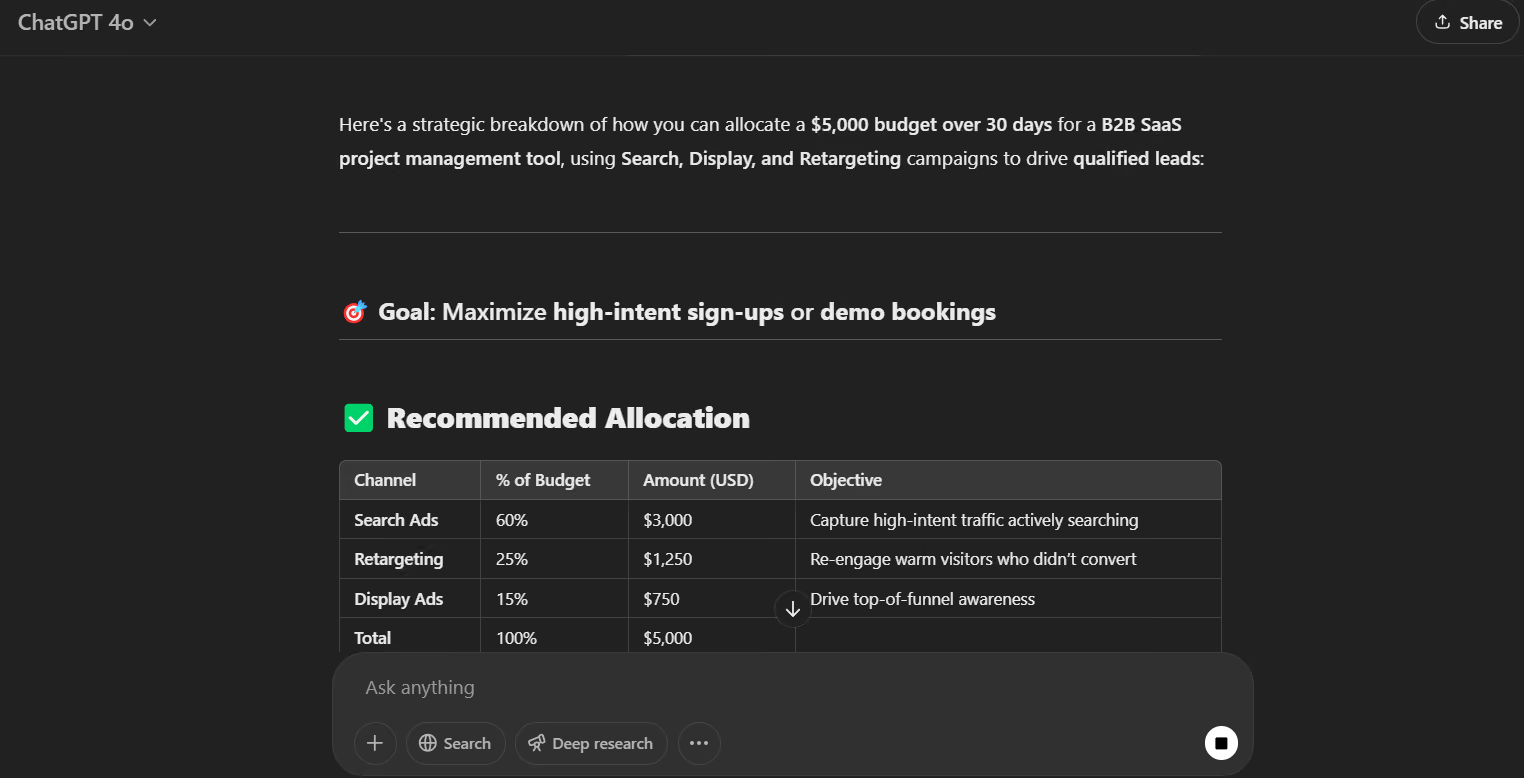
ChatGPT is incredibly handy for brainstorming ad copy, generating keywords, and answering analytics questions.
Need 20 new headline ideas for a Google Ads campaign? Give ChatGPT a prompt with your product info and let it suggest options. It can also help you write long-form content like landing page text or script a video ad. Just remember to fact-check its outputs.
Plus, ChatGPT can analyze text data. For example, you can paste search queries and ask it to extract negative keywords or categorize themes.
This GenAI tool also helps you:
- Allocate budgets smartly across campaigns
- Suggest daily spending based on your total budget
- Recommend when to shift more spending to retargeting or high-performing channels
2. Adzooma
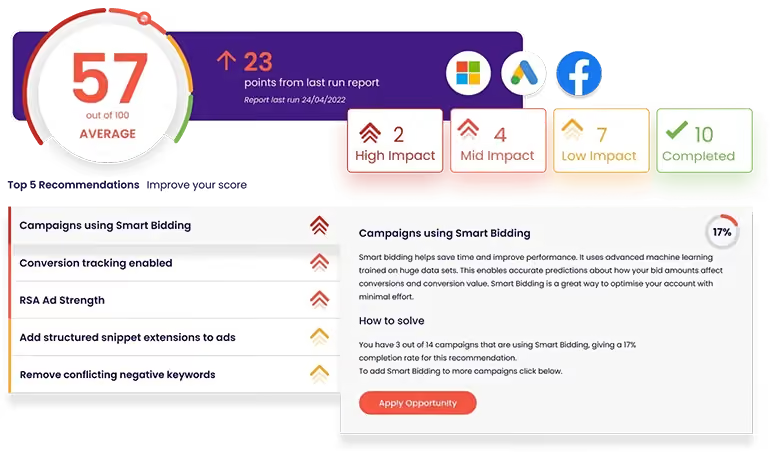
Adzooma is designed for managing campaigns on Google, Facebook, and Microsoft. It uses AI to analyze your accounts and provides automated recommendations to improve performance.
For instance, it might spot that one ad group has a much higher CPA and suggest budget reallocation or identify an ad that isn't following best practices (like missing ad extensions) and prompt you to fix it.
Adzooma's platform also automates routine tasks: you can set bidding rules, get alerts for anomalies, and generate reports. One cool feature is cross-platform management—seeing Google and Facebook campaigns in one AI-driven dashboard.
3. Optmyzr
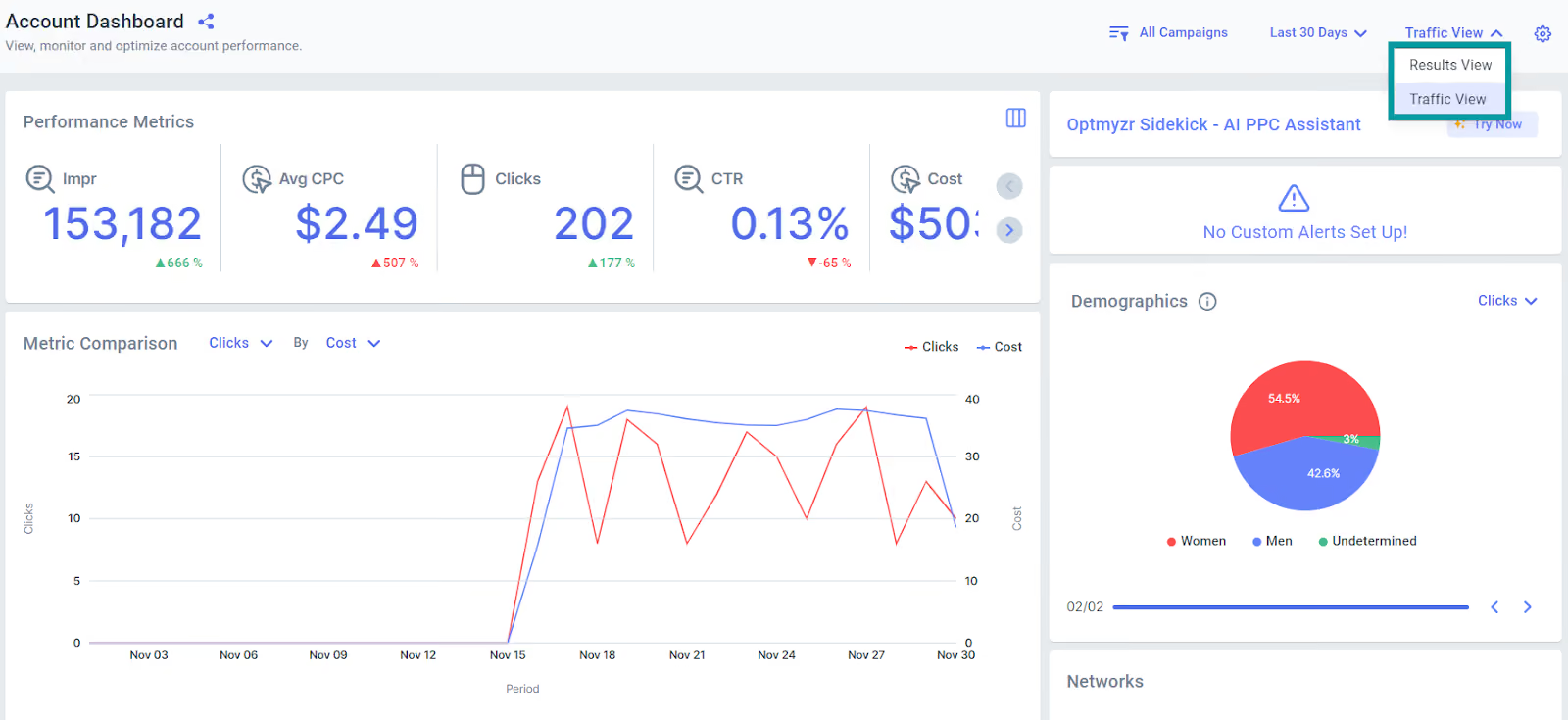
Optmyzr is a suite of tools that brings automation and AI-driven insights to campaign management. Even better? It works across Google, Bing, Amazon, and more, making it great for multi-channel advertisers.
A standout feature is the Rule Engine, which lets you build custom automations (like if CPA > $X and conversions < Y, take action Z) without coding.
Optmyzr also offers pre-built optimizations. For example, it can automatically:
- Identify underperforming ads to replace
- Suggest bid changes based on performance thresholds
- Find search queries that should be added as exact keywords
It also monitors anomalies in metrics and alerts you if something unusual happens (budget spikes, etc.). Another powerful component is reporting. Optmyzr uses AI to highlight important trends in your data for your reports, so you don't have to dig manually.
Partnering With TripleDart for AI-Driven PPC Success
If you're jumping into AI now, you're setting yourself up to win big tomorrow. But if you're waiting on the sidelines, you might find yourself playing catch-up sooner than you'd like.
Want to scale your SaaS business with PPC? Our SaaS PPC agency team can help you grow faster—with less guesswork. We've worked with 100+ SaaS companies to turn ad spend into real Monthly Recurring Revenue (MRR) growth using smart, AI-powered strategies.
Not sure where to start? Check how top SaaS PPC agencies approach AI-driven campaign management, or explore our SaaS PPC strategies for 2026.
Book a demo today and start turning ad spend into real SaaS growth.
FAQs
1. Can AI replace human PPC managers?
In a word, no. What AI can replace (or automate) are many of the tedious, time-consuming PPC tasks: bid adjustments, basic copy generation, routine reporting, etc. But it can't match human judgment when it comes to brand nuance or big-picture thinking.
2. What is the future of AI in PPC?
You'll likely see campaign management become more hands-off, where you input business goals and creatives, and the platform's AI does the rest. Another trend is AI creating personalized video ads on the fly for each user, or ads that morph based on how you interact with them. First-party data will become the primary fuel for AI optimization as third-party cookies phase out, making CRM integration and server-side tracking table stakes for competitive campaigns.
3. Is AI in PPC suitable for small businesses?
Absolutely. SMBs benefit heavily from AI in PPC. With no full-time analyst on hand, AI can manage campaigns 24/7—adjusting bids, flagging issues, and optimizing performance. Many tools are affordable or freemium models so you can get a feel for the value.
4. Can AI create video ads for PPC?
Yes. AI tools like Lumen5, Pictory, and Meta's Advantage+ Creative can automatically generate video ads from text or images. They handle editing, transitions, and basic visuals. Final tweaks may still need human input for brand alignment.

summarize with ai


